A bill expanding insurance coverage for gender-transition procedures advanced through committee earlier this month, even after a young California detransitioner warned lawmakers that the system it protects nearly destroyed his life. Luke Healy was groomed online beginning at age 10, told by adult strangers that he was really a girl. By 18, he was on cross-sex hormones. Today, he says insurers will pay to alter a body but not to repair the damage. When he tried to tell the Senate Health Committee, no one asked a single question.
What AB 1876 Would Do
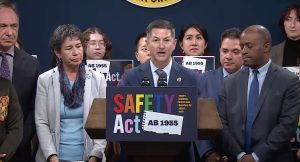
AB 1876, authored by Assemblywoman Dawn Addis (D-San Luis Obispo), is presented as a nondiscrimination measure. Supporters argue that it simply codifies existing federal protections against discrimination in health coverage. However, the bill goes much further.
By incorporating federal nondiscrimination standards into California’s Knox-Keene Act, AB 1876 would prohibit health plans from denying coverage based on a patient’s sex, gender identity, sexual orientation, or related characteristics. Critics argue that this would make it significantly more difficult for insurers to deny coverage for puberty blockers, cross-sex hormones, and gender-transition surgeries, even when concerns exist about medical necessity, long-term outcomes, or patient age.
Because violations of the Knox-Keene Act can carry criminal penalties, opponents testified that insurers could face substantial legal consequences if a denial is found to be discriminatory. During the June 3 hearing before the Senate Health Committee, opponents argued that insurers could be pressured to approve gender-transition interventions rather than risk accusations of discrimination and potential penalties under state law.
The bill passed the Senate Health Committee on a 7-1 vote after hearing testimony from both supporters and opponents, including California detransitioner Luke Healy.
Opponents warn that AB 1876 would further entrench California’s support for gender-transition procedures and make it increasingly difficult for insurers to exercise independent medical judgment when evaluating requests for those interventions, including for minors.
For Luke Healy, those concerns are not theoretical.
What Happened at the Hearing
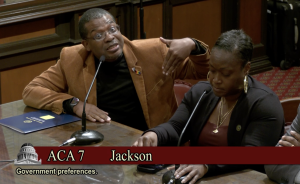
When AB 1876 came before the Senate Health Committee, Luke felt compelled to oppose, warning lawmakers that the transgender drugs promoted and protected by AB 1876 had harmed him.
“I’m here because this bill would have helped further guarantee my destruction and deterioration,” he told the committee.
Luke told the committee his online grooming started at age 10. “Older men and women online, both as activists, told me that I was really a girl. They sent me pornographic images, videos, and coached me to dress as a girl because they said I was really a girl,” he said. “What followed was years of depression, drugs, and alcohol abuse. No mental health provider asked why I believed I was a woman. I said that I was trans and that was all it took.”
His goal is to prevent others from going through what he went through.
Senators on the committee responded to Luke’s testimony with silence. Not a single Senator mentioned it. No one asked about how he was groomed, medically transitioned, or what detransitioning entailed. Instead, lawmakers focused their attention on supporters of the bill. In her closing remarks, Addis thanked the transgender-identified supporter who testified, praising that person’s “bravery” and noting how difficult it can be to relive such an experience each time it is shared. The bill passed on a 7-1 vote. AB 1876 moved forward, and the next hearing was scheduled for June 26 in the Senate Judiciary Committee. (Watch hearing here.)
Luke Healy’s Story
Luke traveled to Sacramento to oppose AB 1876 because the bill would protect and accelerate what he now calls his own destruction.
In an interview with detransitioner Chloe Choe, Luke describes growing up in California’s Central Valley, in a loving family, but recalls feeling different from his peers and struggling with insecurity. Around age ten, he gained access to online communities where adults discussed sexuality and gender identity with children. In other words, they began grooming him.
By age 11, he believed he was transgender. Rather than telling his parents directly, he informed them via a sticky note.
In a documentary interview with Independent Women’s Forum, his mother, Michelle Rodgers, recalled her reaction.
“My gut reaction was something’s terribly wrong,” she said. “All I kept thinking is somebody’s hurting my kid.”
Seeking answers, Luke’s parents brought him to counselors and therapists. Yet his mother says few professionals explored the underlying causes of his distress.
“I was told that my 13-year-old child could make far better decisions for themselves than the adult who cared about them in his life,” she recalled. “It was pretty gobsmacking.”
When providers used fear tactics, stating that refusing affirmation could lead to suicide, Luke’s parents resisted the pressure.
A nurse for over 33 years, his mom took a very scientific approach to her opposition to the pressures of sex-rejecting procedures. “My child’s gender isn’t why I love them. My child’s identity isn’t why I love them,” she said.
At the time, Luke was desperate for cross-sex hormones, but despite the pressure, his parents stood their ground, and looking back now, he is so thankful they did.
“My parents, in the bravest act that I’ve seen in my life and I think ever will, against every single pressure of society, of doctors, of therapists, of other adults—they said no,” Luke said in a documentary with Independent Women’s Forum.
Once he turned eighteen, however, he entered the medical system on his own. He obtained cross-sex hormones through Planned Parenthood and Kaiser, and pursued additional procedures designed to make him appear female.
Yet the promised peace never came.
Instead, Luke describes years of pursuing increasingly invasive interventions while growing increasingly dissatisfied with himself.
Today, he says insurance companies cover procedures that altered his body, but will not cover the costs associated with reversing the damage.
“The waste of more than a decade of my life is a regret that I can never get back or undo.”
His story is a sobering example of what can happen when a medical system responds to a child’s distress with hormones and surgeries rather than addressing the underlying causes, only to leave him to live with the consequences long after the doctors, therapists, and advocates have moved on.
Finding His Way Back
Luke’s detransition did not begin in a doctor’s office. It began when he started questioning the ideology that had shaped much of his adolescence and young adulthood.
Lies were building up, and he began to question the trans community. He realized this was not who he was. He began watching Jordan Peterson, went to an event with Chloe Cole, and was encouraged to start talking about the issue.
As he reflected on his experiences, he became increasingly convinced that the promises of gender ideology had failed him.
“I knew I wasn’t a woman,” he said. “I didn’t know why I wanted to be this way.”
Eventually, he stopped taking hormones, cut off the long hair that had become central to his transgender identity, and embraced life as a man.
Before a job interview, he made a decision that would mark a turning point.
“I went to my interview, and I said, ‘My name’s Luke.’ And I’ve never for one second looked back since then.”
Reflections
Luke now credits God with rescuing him from a path he believes would have led to deeper harm. Rather than seeing himself as someone born in the wrong body, he came to believe that his identity was rooted in the way God created him.
“If I could talk to myself just before this all started happening,” he reflected, “I would tell myself that it was okay to be me and to never let any institution or any strangers or any outsiders separate you from your family.”
Today, Luke has reconciled with his parents and restored broken family relationships.
Luke’s mother, Michelle, said doctors who provide gender-transition procedures should return to basic biology and to their oath “to do no harm.”
“They know what they’re doing is wrong. There’s no evidence to support what they’re doing to give these kids these drugs that will make them impotent, infertile, and suffer for their lifetime,” she said. “Not to mention the osteoporosis, the heart disease. I mean, the list goes on that we don’t even know. I think that these people should be held accountable, and I think that they should go to jail. This is a crime. It is abuse.”
She warned parents not to surrender their responsibility when institutions pressure them to affirm a child’s claimed transgender identity.
“Love is saying no,” she said. “Take charge, or you will lose your children, and they will become a product of something you can’t imagine.”