In California, a parent who feels unable to care for a newborn has a legal, confidential option to safely surrender their baby at a hospital or fire station without fear of arrest. Known as the state’s Safely Surrendered Baby law, this policy was designed to prevent tragic cases of infant abandonment. Now, two bills before the Legislature, AB 1628 and AB 2073, would expand and strengthen that law by giving mothers more time to decide and authorizing the use of secure “baby boxes” at designated surrender sites.
Together, the proposals provide additional safeguards for vulnerable infants and greater flexibility for women facing overwhelming circumstances. In moments of crisis, the answer is not abandonment or abortion; safe alternatives exist. By building on California’s current Safe Surrender framework, these bills aim to ensure that when a mother seeks help, she is met with safety, dignity, and compassionate care.
Current Law:
Under current law, California’s Safely Surrendered Baby law allows a parent or other adult with legal custody to safely surrender a newborn 72 hours old or younger at designated sites, such as hospitals or fire stations, without fear of arrest or prosecution for abandonment.
In addition, the infant must be handed directly to a qualified provider, who will place a confidential anklet bracelet on the infant and make reasonable efforts to obtain a copy of the bracelet for the parent in case either parent requests to reclaim the infant. Under California law, the parents have 14 days to reclaim the baby.
New Legislation:
Two life-affirming bills seek to strengthen California’s Safely Surrendered law. AB 1628, authored by Assemblywoman Michelle Rodriguez (D-Chino), and AB 2073, authored by Assemblywoman Natasha Johnson (R-Corona), would expand California’s Safe Surrender laws, which allow a parent to safely surrender their child without fear of arrest.
AB 1628 extends the time frame women can surrender their baby from 72 hours to 30 days, allowing women more time to contemplate their decision. This expansion complies with the majority of states’ laws that have 30-day safe surrender time windows.
AB 2073 authorizes the use of regulated infant safety devices, commonly called “baby boxes,” at designated Safe Surrender sites. These devices offer an additional safe, anonymous option for parents who may be unwilling to make the direct face-to-face surrender. Baby boxes have been installed across more than 20 states.
History of Safe Surrender & Baby Boxes
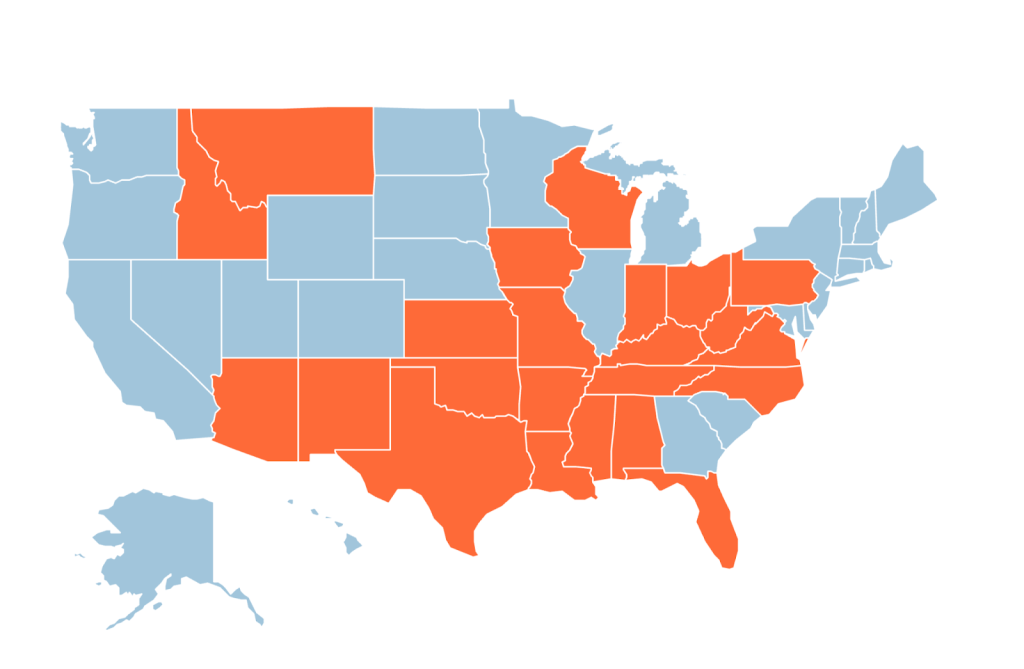
Safe Surrender laws, also known as safe haven laws, began in Texas in 1999 to address infant abandonment, and within 10 years, all states adopted similar protections. Variations of this idea have existed for centuries in other countries. The National Safe Haven Alliance lists each state’s laws and offers a Crisis Helpline.
According to Charlotte Lozier Institute, “Today, over 4,687 babies have been relinquished under Safe Haven laws and are being cared for.”
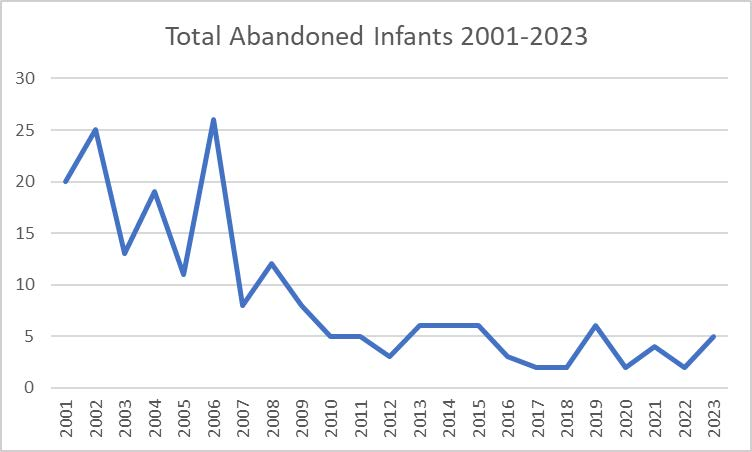
California adopted safe surrender laws in 2001 in response to more infant abandonments. Since then, 1424 infants have been safely surrendered, and yearly abandonment rates have dropped from 25 in 2002 to 12.
According to the Department of Social Services, “From January 1, 2001, to December 31, 2017, 931 newborns were surrendered in California, and 88 newborns were surrendered during the 2017 calendar year. This is compared with 175 infants abandoned since 2001, one of which occurred in the 2017 calendar year. Available data indicate a generally decreasing trend of abandonments since the enactment of the SSB Law, from 25 cases in 2002 to five or fewer cases per year since 2010, representing a decrease of at least 80%.”
Baby Boxes:
More recently, baby boxes emerged as an extension of this idea. Pioneered by organizations such as Safe Haven Baby Boxes, these devices provide a secure, climate-controlled compartment where a parent can anonymously place an infant.
The Founder of Safe Haven Baby Box, Monica Kelsey, says it is important to protect parental anonymity, so that women are not afraid to have their babies safely at a hospital. “Go into the hospital, give birth, tell them you want to surrender under the Safe Haven law, and then leave without an infant,” she said.
These boxes help provide that extra anonymity for women who make a last resort decision to surrender their baby. The boxes are equipped with alarms that alert trained staff to retrieve the baby immediately, ensuring no delay in care.
Safe Surrender laws and baby boxes do not replace prenatal care, financial support, counseling, or adoption planning; they are meant to complement these supports by ensuring that, even in moments of despair, a mother’s choice to carry to term does not endanger her child’s life.
“We don’t want women coming to our baby boxes as a first resort; we want it as a last resort,” she said.
What Does a Surrender Box Look Like?
Here is an example:
How the Safe Haven Baby Box Works
A typical infant safety device:
Is installed in an exterior wall of a fire station or hospital
- Features a temperature-controlled bassinet
- Locks securely after placement
- Triggers an immediate silent alarm to on-site responders
Once inside, trained personnel quickly retrieve the baby, transport the newborn for medical assessment, and begin the foster care process.
According to Pregnancy Help News, “More than 400 Safe Haven baby boxes are installed around the United States, and more than 70 safe surrenders have taken place since the organization began less than 10 years ago. Last year, 14 infant lives were saved through the program.”
Safe Haven Baby Box has a complete guide on how safe surrender locations can install a baby box.
A Pro-Life Framework: Offering Real Alternatives to Abortion:
During oral arguments in Dobbs v. Jackson Women’s Health Organization several years ago, the topic of Safe Surrender laws came up during the oral arguments.
Supreme Court Justice Amy Coney Barrett brought up the issue in response to the argument that forced parenting or forced motherhood would hinder women’s access to the workplace and to equal opportunities. Barrett stated that arguments for abortion are “focused on the consequences of parenting and the obligations of motherhood that flow from pregnancy. … Why don’t the safe haven laws take care of that problem?”
Though not originally intended as a policy response to abortion access, her remarks illustrate a broader point embraced by many pro-life advocates: expanding life-affirming support for mothers can reduce the pressures that lead some women to consider abortion.
“Policies like AB 2073 and AB 1628 represent practical, life-affirming ways to protect newborns, reduce unsafe abandonments, and support mothers in extremely difficult moments, all without relegating women to a choice between the responsibilities of parenthood or resorting to abortion,” California Family Council Vice President Greg Burt said.